World Poetry Day

Som de fleste sikkert har fått med seg nå er dagen i dag Verdens poesidag, i følge UNESCO.

En utmerket unnskyldning for å dele et dikt. Egentlig hadde jeg tenkt å dele et på engelsk fra en bok som heter The King of Twist, men den er sporløst forsvunnet just nu, så da blir det i stedet norsk og Trond Botnen. Han er en av mine absolutte favoritter, og jeg fatter ikke hvorfor de to diktsamlingene hans kun er tilgjengelig fra antikvariater. Egentlig burde de være allemannseie, men der er vel kanskje ikke resten av verden helt på bølgelengde med meg (altså, poesi som allemannseie?). Nåja.

Siden det snart er påske og jeg sikkert ikke er alene om å ha tenkt meg en tur over svenskegrensa i løpet av påskeferien synes jeg det kunne passe med dette, fra Nattordbok (1970):

Reisen til Sverige
ble ikke som planlagt

selv om vi fulgte
alle veier, brosjyrer
gode råd
førte bilen lengsels-
og forventningsfullt
gjennom et
brunt og grått og grønt
og tåket landskap
da vi kom til grensen

lå ikke
Sverige
der mer

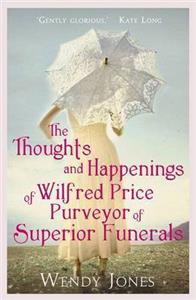
The Thoughts and Happenings of Wilfred Price, Purveyor of Superior Funerals – Wendy Jones

wilfredI’m pretty sure I got The Thoughts and Happenings of Wilfred Price, Purveyor of Superior Funerals from my friend Tone, I can see from Goodreads that she really liked it.

Me, on the other hand? Well, I’m torn.

From the Goodreads synopsis: «Wilfred Price, overcome with emotion on a sunny spring day, proposes to a girl he barely knows at a picnic. The girl, Grace, joyfully accepts and rushes to tell her family of Wilfred’s intentions. But by this time Wilfred has realised his mistake. He does not love Grace.»

Extricating himself, however, proves to be more difficult than he had expected. And so the story deepens and expands.

I didn’t not like it. I certainly read it quickly enough. I root for Wilfred, and for Grace. I care for their fate, as I care for several of the other characters. But something seemed to me to be lacking while I read it. Well, for one, one of the major plotlines is left a little too wide open for my taste. That’s one problem I have. The other is less tangible. Because while, as I said, I root for Wilfred and Grace, I somehow fail to be touched very deeply. Several of the events should have been bringing tears to my eyes, but I was left dry-eyed throughout (and that is quite a feat these days, I’m a big sop). I find it hard to pinpoint, but for some reason it felt more as if I was reading a (wordy) plot synopsis rather than an actual novel. Does that make sense?

Maybe it’s just me. Anyway, middling to good, I’d say, not brilliant.

Doktor Proktor og det store gullrøveriet – Jo Nesbø

proktor_gullrøveriJo Nesbø leverer igjen med Doktor Proktor og det store gullrøveriet, men skuddet sitter ikke så sikkert som tidligere. Etter min mening er dette den dårligste Doktor Proktor-boka. Men den er fortsatt veldig, veldig bra.

Norges banks gullbeholdning (en hel gullbarre) blir stjålet, og det bare en uke før Verdensbanken skal komme på inspeksjon. Dersom det blir oppdaget at gullet er borte vil Norge bli kastet ut i økonomisk krise. Kongen gjør det eneste rette og tilkaller Bulle, Lise og Doktor Proktor. Ferden går til London, og dere har våre tre helter flere helt utrolige eventyr før de – selvsagt – løser oppdraget og redder Norge fra katastrofen.

Jeg vet ikke helt hvorfor det ikke fungerte optimalt denne gangen. Kanskje er tanken på økonomisk kollaps litt for abstrakt til å fungere som trussel? Det burde selvsagt ikke være slik, særlig siden jeg visstnok er voksen nok til å forstå konsekvensen av noe sånt, men jeg fikk ikke den store trusselfølelsen her. Nåja. Morsomt er det. Spenningskurven er bra, om ikke toppen er like høy som i de tidligere bøkene. Krumspringene, både handlingsmessig og språkmessig er der i hopetall, og mye av det er skrevet for voksne, selv om jeg ikke tviler på at ungene synes det hele er storveis også. Selv setter jeg pris på et godt (og ofte også et ikke fullt så godt, noen kaller meg lettmort) ordspill, så jeg flirer høyt av slike ting som dette:

Riktignok var Rublov verdens rikeste mann, rikere enn Olav Kron, Steinrik Hagen og Skillinge Røkke til sammen.

Kan media fluksens begynne å omtale de relevante herrer med deres nye kallenavn, please? Som den anglofil jeg er setter jeg selvsagt også pris på puber som heter ‘Løven, Hamsteret Og Den Ganske Skjeve Oksekjerra Til Herr Woomblenut Som Pleide Å Selge Rugøl Borte På Gamlemølla’.

Snart på tide å teste første boka som høytlesing for seksåringen, kanskje?

Utterly me, Clarice Bean – Lauren Child

clarice_beanUtterly me, Clarice Bean was near me on the shelf when I suddenly found myself with a sleeping baby on the couch and no current read within reach. I figured it would be alright to start it since it was likely to be a quick read, which it was.

I enjoy Lauren Child’s style, something I know from having sat through quite a few Charlie & Lola episodes on children’s tv. I like the whimsical element (though I admit it sometimes seems a bit forced). Clarice Bean is very similar, and Clarice could be Lola a few years down the line, though Charlie is missing, having been replaced with three siblings, no less. Another difference is that Clarice’s parents are actually present in the story. Still, they are very similar, and I keep hearing Lola’s voice in my head as I read Clarice’s story.

For all that it works pretty well. It is not, however, a children’s book for grown-ups. I will not be reading any more (except maybe aloud to the lasses), but I might definitely buy them, as I suspect they will hit the spot when the girls reach the right age (in a year or two as far as the oldest goes, I imagine 8ish to be a good age to read this).

Hundraåringen som klev ut genom fönstret och försvann – Jonas Jonasson

jonassonSå har jeg altså endelig også lest om hundreåringen som ‘klev ut genom fönstret och försvann’. Siden boka nærmest er blitt geniforklart i enkelte kretser er jeg ganske fornøyd med at jeg klarte å lese den med relativt åpent sinn. Som regel gjør slik hype at jeg enten ikke klarer å få begynt på ei bok i det hele tatt eller at jeg tror på hypen og blir skuffet fordi boka ikke lever opp.

Hundraåringen er blitt omtalt som en ‘humrebok’, og humre gjorde jeg. Jeg lo til og med høyt minst en gang. Persongalleriet er (stort sett) sympatisk, det gjelder ikke minst Allan Karlsson – hundreåringen selv – som etter et mer enn gjennomsnittlig begivenhetsrikt liv havner  på gamlehjem i en alder av 99 og bestemmer seg for at det nå kan være nok, nå vil han dø. Men det å dø sånn uten videre er ikke så lett, så etter noen måneder, på sin egen hundreårsdag, faktisk, klatrer han altså ut vinduet og begir seg ut på et nytt eventyr.

Halvveis forsøkte jeg å sammenfatte boka for min bedre halvdel, og endte med å karakterisere den som en blanding av en Arto Paasilinna-bok og Forest Gump. Det høres kanskje litt merkelig ut, men det fungerer aldeles utmerket som underholding.

Å andra sidan låg ju Spanien i utlandet, precis som alla länder gjorde, Sverige undantaget, och efter att ha läst om utlandet i hela sitt liv vore det inte så dumt att få uppleva det på riktigt någon gång.

(Side 76) Og der ligger kanskje kjernen i min omtale av boka: Dette er lett underholdning. Visst humrer man, visst finnes det spark til øvrigheta og til A4-livet og visst kan man sikkert dra ut en og annen (om enn ganske banal) livsvisdom av det hele. Men jeg føler liksom ikke at jeg sitter igjen med noe særlig etter endt lesing.

Det er da heller ikke noe krav, så ikke la deg skremme av det. Boka anbefales absolutt som f.eks. ferielektyre, eller som et feelgood avbrekk i hverdagen om du vil.

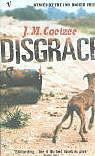
Disgrace – J. M. Coetzee

coetzee

(I guess it would be appropriate to start this with a trigger warning for rape.)

Disgrace was our February read in the bookcircle, which is probably just as well because I don’t think I’d ever have read it (and certainly not finished it) of my own accord.

David Lurie is an ageing professor at a university in Cape Town, teaching Communications since his orginial subject – literature – has been deemed too old-fashioned and the department shut down. He falls in lust with one of his students and has an affair of sorts with her, but is subsequently accused of harassment (rightly so, I should say). He refuses to apologise and therefore loses his job. To get away from it all he goes to visit his daughter Lucy, who lives «the simple life» in the Eastern Cape. She has help on the farm from Petrus, who is also developing the land next-door. David and his daughter do not have an easy relationship, it is clear that while he loves her, he does not approve of the way she choses to live her life. He does, however, get involved in her daily routine. That routine is broken when a gang of three attack the farm, stealing anything of value, setting fire to David and – David believes and we with him – gang-raping Lucy. After the attack, the differences between father and daughter increase, he wants her to get out of there while she wants to stay.

To start with I was pleasantly surprised. I liked David more than I had expected to, and although I did not approve of his relationship to Melanie (parts of which were dangerously close to rape), I rather liked his refusal to «issue an apology» – regardless of whether he meant it or not – in order to save the university’s face and keep his position. Most of all I liked his way with words, and up until half-way through the novel I have marked several quoteworthy passages.

His temperament is not going to change, he is too old for that. His temperament is fixed, set. The skull, followed by the temperament: the two hardest parts of the body.

After that, though… At some point «liking» David becomes impossible. As far as trying to understand his daughter, well, he says he’s trying, but he is not, really. However, I don’t really like Lucy, either. I found her somewhat, well «boring» is not quite the correct word, but certainly not terribly interesting. All honour to her for chosing the simple life and being happy with it, but for one I felt her resignation to Petrus’ encroachment had started long before the attack, and I also to a large extent disapprove of her handling of the attack just as much as her father does (though with an understanding that it would not have been my business to approve or disapprove, had this been real life, which he lacks).

And I do need someone to root for when I read, and there really isn’t anyone once I lose all respect for David. Which is one problem.

The other problem is that I really don’t understand what Coetzee wants with this book. What is he trying to say? I do realise this may say as much about me as about Disgrace, but still, it’s my blog, so I will say it: The whole thing seems somewhat pointless to me. And it leaves a sour taste, too, as I feel that Lucy – much as I fail to really like her I do not wish her harm – is sacrificed in order to make a point about David’s relationship to his daughter specifically and humanity in general. The attack is used to turn the spotlight on David’s feelings and actions, rather than as the highligth of a plotline in itself. I guess what I’m saying is that I don’t approve of rape as a literary device, especially one that just showcases the emotional angst of middle-aged white males.

Still, there is meat here, and I can sort of see why the novel is so celebrated. For me, though, it’s a thumbs down.
Flere bokjøp

I dag var jeg innom et bokloppis annonsert på facebookgruppen Loppemarkeder i Trondheim. Det viste seg å være overskuddslageret til Sirkulus som var tilgjengelig for «browsing», og jeg gikk derfra med fem bøker:

  • Paradisgaten – Richard Herrmann
  • Over til London – Richard Herrmann
  • Anger – Roy Jacobsen
  • Vi var med Charles Darwin på Beagleekspedisjonen
  • Den nysgjerrige abboren – Elsa Beskow

Særlig Jacobsen var jeg fornøyd med. Den så nesten ulest ut (er nok maks lest – pent – en gang), og er en av bøkene i Mammutkatalogen jeg vurderte, men bestemte meg for å se om jeg kunne få til halv pris av Mammutpris. Nå fikk jeg den til 30 kroner i stedet. Helt greit.

oksendal
Bøker jeg ikke kjøpte, kanskje står de fortsatt og venter på nettopp deg i morgen?

Etterpå fant jeg ut at jeg skulle ta en sving innom Notabene i Dronningensgate – Øksendal, som butikken er kjent som lokalt, samme hvilken kjede den tilhører – for å se på Notabenekjedens salg, siden de har eget og ikke er med på Mammutsalget. Men der ble jeg møtt med plakater om 70 % på hele butikken. Den skal altså legges ned. Det er jo trist, men jeg benyttet meg av sjansen og handlet for over 400 kroner. Nå angrer jeg selvsagt at jeg ikke tok meg tiden til å svinge innom der på mandag, siden de utplukkede hyllene vitnet om at de har holdt på med opphørssalg noen dager… Akk ja.

  • Blekkblod og Blekkdød – Cornelia Funke (jeg har lest den første på engelsk, men siden de uansett er oversatt fra tysk tenkte jeg norsk var like greit)
  • Kaptein Blåbjørns 13 1/2 liv – Walter Moers
  • Steintre – Gyrðir Elíasson
  • Den sommeren pappa ble homo – Endre Lund Eriksen
  • Når prinser blir hjemme – Per Gustavsson
  • Orm og Øgle og Venner: Orm og Øgle – Joy Cowley og Gavin Bishop

Her skal man legge til at noen av bøkene var på tilbud i utgangspunktet og 70 % avslag på tilbudspris kan bli veldig billig, Kaptein Blåbjørn betalte jeg for eksempel hele 7,50 for og den er på 689 sider. Her snakker vi valuta for pengene!

I tillegg kjøpte jeg fargeblyanter og tre Josefinedataspill. Det vil nok ungen sette pris på når hen får vite det…

A little bit of shopping – London and Mammut

Well, for once I did not come home from London with a suitcase full of books. In fact, the sum total of bookshops I visited in London per se was zero, zilch, not one. I hear your gasps of shock and horror, and I agree. But we were there to be touristy tourists to please a certain six-yearold, and shopping was not something we really got around to (well, excepting Hamleys, but that’s not so much a shop as a toy museum where you can buy the exhibited toys. Or something).

Anyway, at the not very impressive but I make do whith what I find newsagent at Gatwick, I purchased John Green’s The Fault in our Stars. Even I have to read Green sooner or later, though I wonder if it can live up to the hype. I sure hope it can, because it sounds lovely. Since it was «Buy one get one half price» I also purchased Underground Overground: A Passengers History of the Tube by Andrew Martin. It sure looks interesting – and I love the vintage feel of the cover:

undergroundOg så var det Mammut. Jeg har notert meg en lang liste over norske romaner som jeg har tenkt å se etter om det blir noe halv pris på Mammut-pris eller noe slikt, men siden jeg egentlig helst vil ha paperbacks for tiden gidder jeg ikke kjøpe hardbacks til 149,- og oppover. Det vil si, jeg sikler på Askildsens samlede, og ender vel med å kjøpe Jo Nesbøs Gjenferd, siden jeg har alle de andre i hardback…

Men noen barnebøker ble det, og noen få til oss voksne også:

  • Mattemagi – Håvard Tjora
  • Charles Darwin og Beagleekspedisjonen – A. J. Wood
  • Speil for tidens ansikt: Gullvågportretter 1979-2009 – Harald Stanghelle
  • Charlie og sjokoladefabrikken – Roald Dahl (pop-up bok)
  • Klaffeatlas – Alex Frith & Kate Leake
  • Kunstdetektivene 3-i-1 – Bjørn Sortland (ekstratilbud på Ark Trondheim Torg)
  • Moi om kvelden – Endre Lund Eriksen & Khim Tengesdal (ill.)
  • Mannen, menneskets beste venn – Karine Haaland
  • Tambar og sjøormen – Tor Åge Bringsværd & Lisa Aisato (ill.)
  • Kollektivet: Kollektivt sammenbrudd – Torbjørn Lien
  • Alvin Pang og en søster for mye – Endre Lund Eriksen & Olve Askim (ill.)

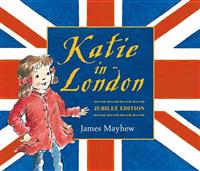
Katie in London – James Mayhew

katieinlondonI keep meaning to blog more about the books we read with the lass, so while I remember:

I was tipped off about Katie in London, and I’m very glad I was. The plot is hardly revolutionary: Katie goes to London to see the sights with her little brother and her grandmother, but before they really see anything, grandma wants a rest on a bench at Trafalgar Square. Katie and her brother therefore travel around London with one of the lions instead. They see St. Pauls, the Tower, Tower Bridge, the London Eye, the changing of the guards at Buckingham Palace and Hyde Park.

Like most kids (and some adults), the lass tends to enjoy something more if she’s heard about it a lot. So reading books about a place before going there is good. The internet, and especially YouTube is good too.

From that point of view, this book fulfills its purpose beautifully. And while it is not great literature, neither is it bad in any way, it fits its audience without being (too) tedious for the grown-up who has to read aloud.

London – Edward Rutherfurd

london_edward_rutherfurdI’m finally done! And the reason it took so long is really none of Rutherfurd’s fault (well, except in writing such a thick book, though I’ve read worse), but simply because life, really.

Anyway, I liked it. I felt I learned quite a bit, which is nice, though I must admit my head is not made for remembering dates, so I got confused several times and had to search backwards to a page with a date on it. Several people on Goodreads have complained that since it spans such a lot of time and events there is no time to get to know the characters, but I found that to be a minor problem – and I do tend to dislike being rushed on to a new set of characters just when I’ve gotten interested in the present set. This is why I’m not a major fan of short-stories. But Rutherfurd’s trick is to stick to a few families, and to give them somewhat hereditary traits – not just physical, but also of temperament – so that one the whole you can tell from the name of a character whether he/she will be a «hero», a «villain» or someone bumbling but generally well-meaning for example. Well, towards the end the families intermarry and intermingle and it all gets somewhat complicated, but by then I was hooked anyway, and there was still a sense of «I will root for you since your grandfather was so nice» or perhaps «I will root for you since your father was so shitty».

I had one small, but niggling quarrel with the book, though. I may have mentioned that I’ve learnt pretty much all the history I know from novels, which makes this a perfect fit. And more than anything, I love the little daily-life details. The «how a Roman forged coins», for example. Interesting stuff, I tell you. But I need to trust the author, I need to believe he (or she) knows what he (or she) is talking about. And therefore passages such as this one throws me:

But Dame Barnikel was happiest of all when she was brewing ale, and sometimes she would let young Ducket watch her. Having bought the malt – «it’s dried barley,» she explained – from the quays, she would mill it up in the little brewhouse loft. The crushed malt would fall into a great vat which she topped up with water from a huge copper kettle. After germinating, this brew was cooled in throughs, before being poured into another vat.

(Page 524) Except barley (or any grain) won’t germinate after it’s been milled. In fact, «malt» isn’t dried barley, it’s barley that has germinated and is then dried, and there is a crucial difference. «Dried barley» is just a grain whereas the germination means the «malt» is bursting with sugars which is what the yeast later feeds on in the process that actually makes alchohol. What happens after you mill is quite rightly that you add hot water to the «coarse flour» (called «grist»), but that water is meant to extract the sugars (and partly set off enzymes that convert even more of the starches into sugars to be extracted, if you want to get really technical) in a process called mashing.

And I know it’s a very, very small detail and not at all important to the story, but it grates, and it makes me wonder where else he’s tripped up and which details I now think I’ve learnt turn out to be less than accurate.

But let’s return to happier thoughts, because I really did like the book, and end with a quote which is really a much better representation of Rutherfurd’s skill:

And so with confidence he could give his children these two important lessons: «Be loyal to the king.» And perhaps profounder still: «It seems that God has chosen us. Be humble.»

By which, of course, he really meant: be proud.

(Page 787)